Categories

Weekend update for 8-7-16

Like every other weekend here at Gun Lab it was another one of to much work and not enough fun stuff.

The exciting news is that I finally finished putting in the A/C for the machine shop. This will really help as now you can work and keep the sweat out your eyes.

DSC_0992s

Due to the heavy storms that we have been having a few leaks showed up at the machine shop roof. So the roof was once again re-coated and sealed.

DSC_0993s

The 3D printer stopped working because of the old pla that came with it. The old material would constantly break on jam up the heating nozzle and feed motor. I took apart the first nozzle and motor and cleaned them out. Wow what a job. Still need to finish the first one then it is on to the next nozzle.

DSC_0988s

DSC_0989s

DSC_0990s

DSC_0991s


I picked up a number of pounds on used brass fittings and valves, so it was time to separate, clean and store it all. I am getting ready for the up coming metal casting season.

All clean and ready to be melted.DSC_1088s

DSC_1089sStill need to be cleaned

DSC_1090sStuff to keep for other projects

DSC_1091s

Finally I needed to do so mandatory house work. Two of the toilets needed to be changed out.

Just another fun filled weekend.

Webley Mk6

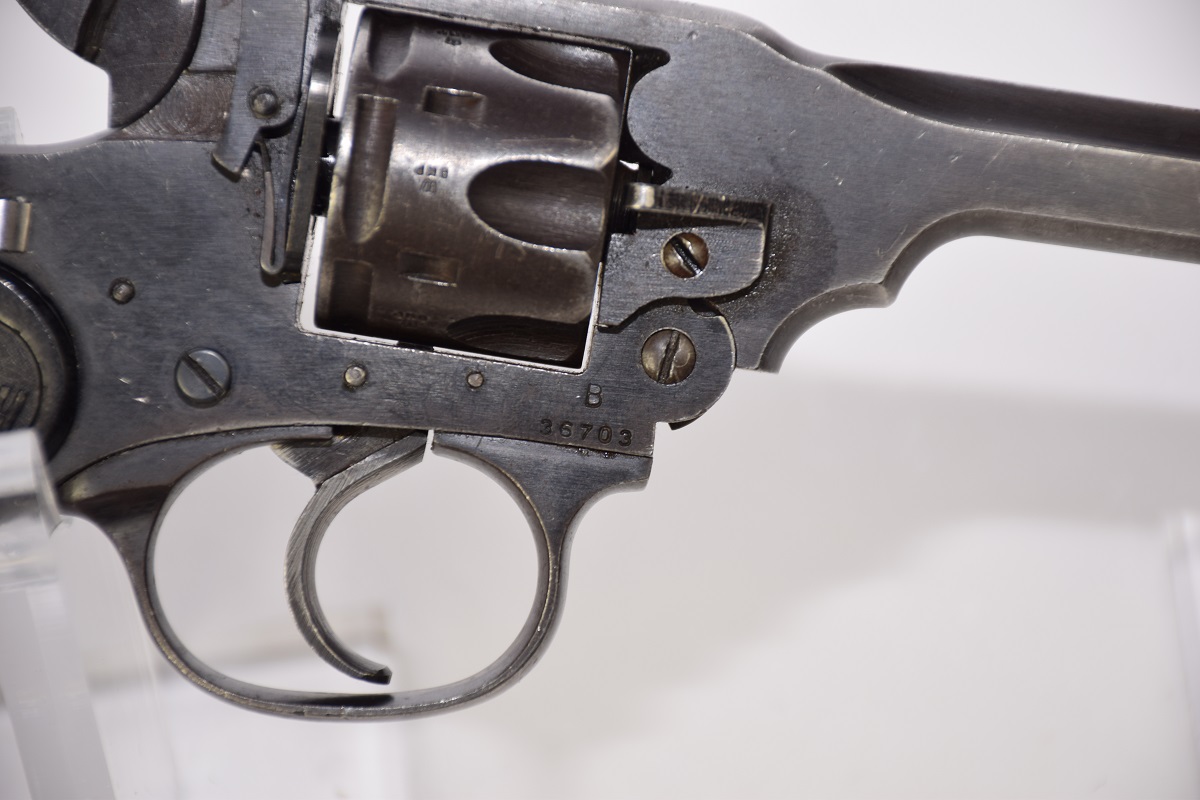
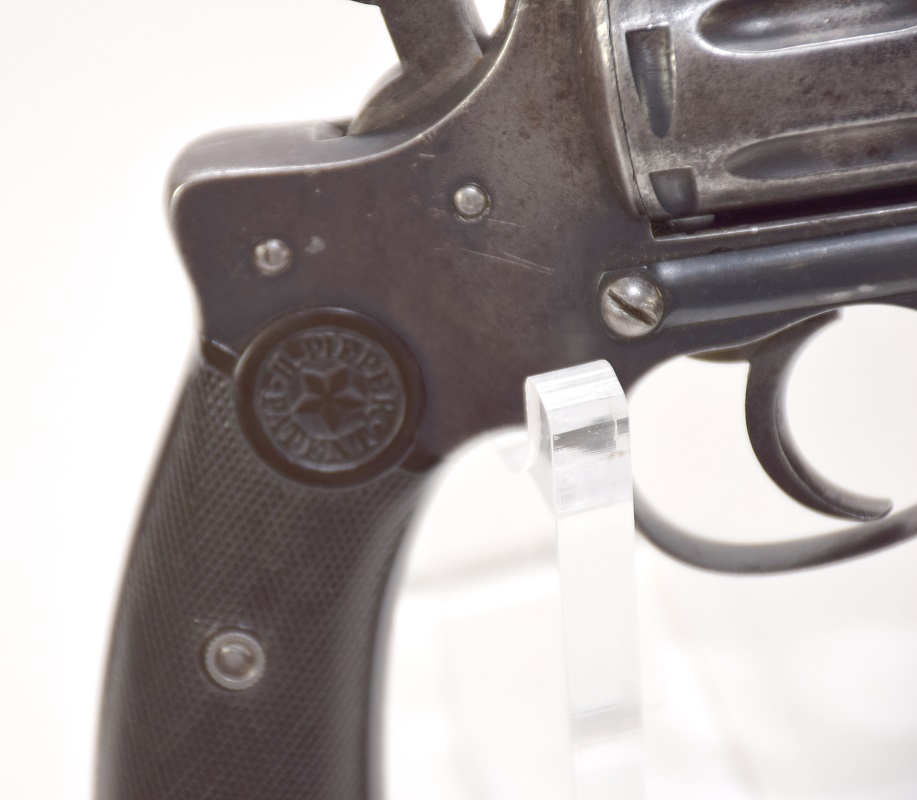
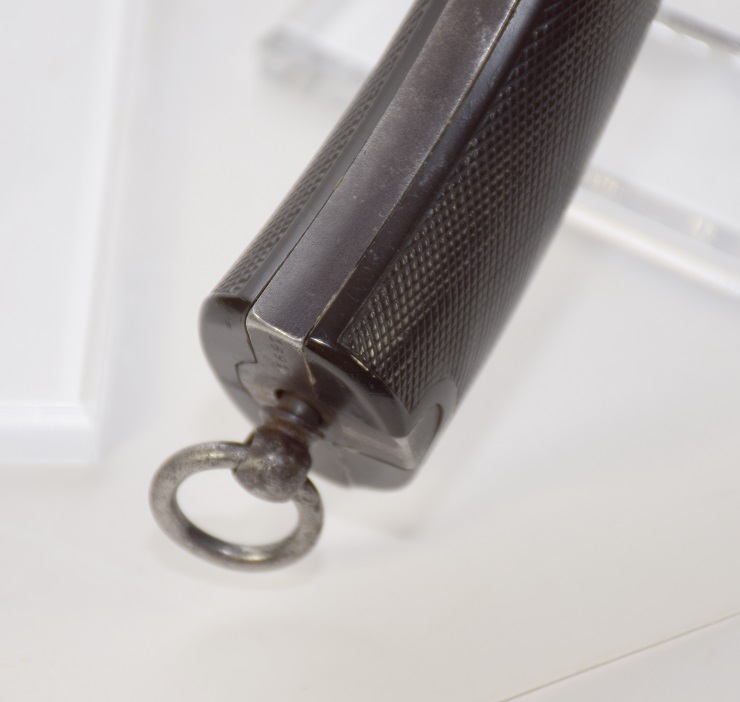
With the Mark 6 Webley revolver coming about in and being approved for service in May of 1915 it officially became the issue hand gun in British service. You can see the differences between it and the Mk4 revolver that it was suppose to replace. The pistol came with a 6″ barrel and was chambered for the .455 cartridge.  The grip style had been changed as well as a minor change to the front sight.

A photo of the right side of the revolver.

DSC_0736sLeft side of the revolver.

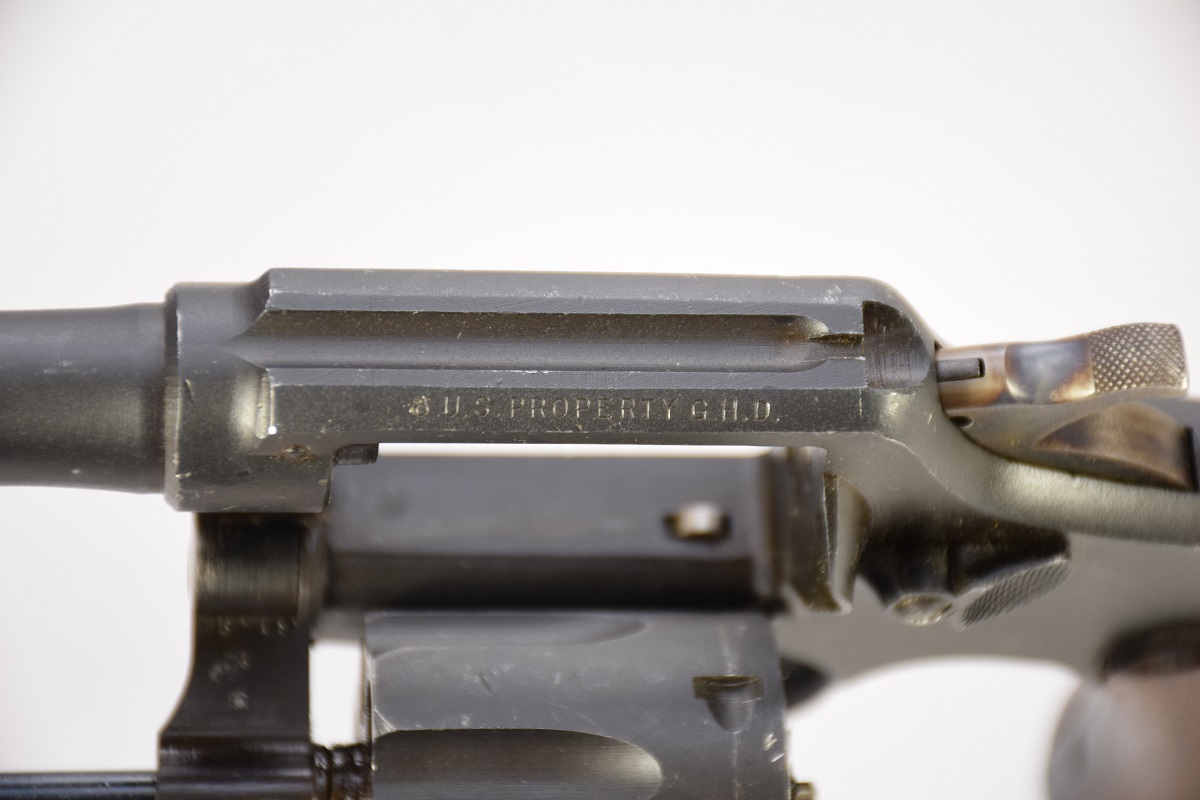
DSC_0737sClose up of the markings on the side plate.

DSC_0738sYou can see that this one has been shaved to accept 45 auto rim or 45 acp with half moon clips.

DSC_0739s

DSC_0740s

DSC_0742s

DSC_0741sMark *VI* stamped on the side.

DSC_0744sThis is actually one of my favorite revolver to shoot.

Full Auto pistol part 3

This is the third and last post on the prototypes full auto pistols. This is also my favorite of the pistols we have covered.

It is a cross between a CZ52, Browning high power, and some original ideas. You can clearly see the Cz slide in these pictures.

The first couple of pictures show the left and right side views of the pistol.

visser 091cs

visser 090csTo convert this pistol all that is required is to pull down the trigger guard / front pistol grip.

visser 088cs

visser 089csA couple of close up pictures of the side of the receiver at the grip panels showing the welding to increase the grip width.

visser 095cs

visser 094csThis next series of pictures show the slide removed and the fire control mechanism.

visser 107cs

visser 110s

visser 109cs

visser 108cs

visser 111s

visser 112cs

visser 113cs

visser 114s

visser 115csThis is the magazine for this pistol. A browning high power magazine.

visser 105csThis is the modification to allow it to be locked on the side instead of using a push button release.

visser 104cs

visser 093csI would like to have just a semi auto version of this pistol

Cut away weapons

By now most of you that come to this site know that I have a thing about cut away weapons. They are a great tool in understand how weapons work and in my case allow me to see the functioning of the guns that we make.  I own a number of cut away weapons and have photograph a number of other ones as well. As I am always on the look out for them I thought I would share some of them that are currently available at the Cowan Auction house.

To begin there is a Enfield cut away rifle, lot 195,  http://www.cowanauctions.com/lot/cutaway-lee-enfield-rifle-186031/

186031_1

186031_2

Next are a couple of Glock cut away pistols lots 503 and 504. The first is a Glock 17. http://www.cowanauctions.com/lot/cutaway-glock-17-semi-automatic-pistol-184589/

184589_1

184589_2

The next is a Glock 19. http://www.cowanauctions.com/lot/cutaway-glock-19-semi-automatic-pistol-184603/

184603_1

184603_2

And the last one they have is a Tokarev pistol. Lot 583. http://www.cowanauctions.com/lot/cutaway-russian-tokarev-semi-automatic-pistol-184451/

184451_2

184451_1If you have an opportunity you should stop by there site and check them out.


Mk4 Webley .455

Unfortunately I have no Mk3 pistol in my collection, maybe someday. The next in line is the Mk4 pistol in .455. This pistol was accepted into service in October 1899. Commonly call the Boer war pistol. It was the pistol supplied by the British government for troops sent to South Africa to fight the Boors. The Mk 4 was a very well design and serviceable weapon as no changes were made to the weapon for the next 14 years and then only when the Mk5 was introduces in 1913. The pistol remained in service through WW1.

Left side view.

DSC_0668c Right side view.

DSC_0669sStamped markings on the Mk4

DSC_0666sBarrel lengths come is 4, 5, and 6″ lengths.

DSC_0677s

You can see the cam, cam lever, cam lever fixing screw in this photo

DSC_0680sThe dimension of the hammer spur has been reduced

DSC_0672sClear view of the hardened steel shield.

DSC_0581sOpen cylinder

DSC_0673sBy the Mk3 and Mk4 versions the cylinder cam and cylinder cam lever had been installed.

DSC_0679s

Webley Mk2

The second pistol in the series in the Mk2 revolver. By 1894 a number of changes had occurred to the Mk1 to warrant a new nomenclature. Thus the Mk2 was born. The modifications that occurred were to the frame, hammer and the changing of the machined in shield to one that was a separate hardened steel shield.

A view of the left side of the revolver.

DSC_0574cs

A close up of the stamping on the side of the frame showing the Mk2 stamp.

DSC_0583sRight side of the revolver

DSC_0578csThis photo shows the new hammer design that came with the Mk2 revolver. The change was a larger spur, for the benefit of the cavalryman, and a stronger nose.

DSC_0576csIn addition to the difference in hammer size the thumb piece portion that was chequered was also increased in size.

DSC_0577cs

DSC_0579sA good view of the separate shield that was came with Mk2

DSC_0581sThe broad arrow mark on the top strap.

DSC_0580sThe Mk2 revolver barrel will withstand a safe pressure of 6 tons per square inch.

Webley Mk 1

I have decided to do  a short series of posts on the Webley and Enfield revolvers in my collection. The first of the series is the Mk1 455 revolver.

The one in my collection is a cut away pistol.

This is one of any order of 10,000 pistols bought in 1887. This pistol was later converted to a armories cut away gun. All Mk1 guns were black powder guns.

DSC_0643s

DSC_0648sA close up of the right side cut away section.

DSC_0646s

DSC_0647sA close up of the left side cut away section.

DSC_0644s

DSC_0645sAction open.

DSC_0649sYou can see from this photo that this is a Mk1 and not a Mk1* as the shield has not been modified.

DSC_0651sA close up of the cylinder

DSC_0652sLater Mk1 were converted to Mk1* and Mk1** with the addition of a Mk2 pistol shield that was dovetailed into its breech and by adding a new barrel and cylinder.


Unusual Vietnam 22 pistol


Ken, a friend of gun lab, sent us a very unusual 22 pistol that his father-in-law picked up while serving in Vietnam. It appears to be factory made pistol. However, I have never seen another one like it.

This is it.

DSC_0619csThe only information on the pistol

DSC_0622csClose up of the right side of the pistol and cylinder.

DSC_0623csLeft side view with the hammer drawn back.

DSC_0625sSome interesting views of the cylinder and latching mechanism.

DSC_0627s

DSC_0629cs

DSC_0628cs

DSC_0630csThe latching mechanism comes from the Harrington and Richardson break open revolver.

DSC_0633cs

DSC_0636sYou can see it’s French heritage by looking at the cylinder.

DSC_0639sThis is the only information that exists for this pistol.

scan0001csIf anyone has any additional information on the pistol or the arsenal where it was made I would greatly appreciate it.


Weekend update for 7-10-16

Every weekend I have a list of projects that I want to do. Generally I can get through only 15% of what is on my list. This weekend it was even less then that.

With the summer heat this year, generally the same every year, it has just gotten to me for some reason. Probably due the A/C going out in the clean room and in the wood shop. Both of the units were small and really over taxed but they kept the temperatures down enough that you did not feel like you were sweating to death in the shop. Starting last weekend I made the decision to actually install heat pumps in both shops. The duct work has always been there but it was designed for an evap unit and not actual A/C. That is out after the serious rust issue that I have been dealing with.

Last weekend I ran the new wire for the 4 ton unit for the machine shop. This weekend my wife bought it and we unloaded it from the back of my pickup truck. With the backhoe still down it was another fun filled exciting weekend . It is how ever down on the ground and wired in both power and control.

DSC_0319s

The duct people will be out this week so I can do up drawings and these I will have made.

For the wood shop it needed a little more work. I first had to get a slab down for it and for the size that meant that I could not order it in it had to be mixed on site all 35 bags. However it is now done and that A/C unit will be picked up this week and put on the pad.

DSC_0328s

DSC_0336s

Still dealing with the heat and the fact that the fab shop will be coming soon on the shop to work in list it was decided to get the evaps working in there. This is one of those projects to complete at step “Z” you first had to start at step “A”. The fab shop had gotten a little out of hand in the past couple of months. The first step was to store somewhere all the cabinet fronts that I demo out of a house, these will be used in the wood shop.

DSC_0326s

DSC_0322s

Then a total clean up and up away project commenced. All the casting equipment had to be stored away as well as all the tools laying about.

DSC_0329sYou can actually walk down the isles.

DSC_0331s

Then the new sheet metal ducts that we did a while back had to be installed and the evap coolers flashing installed and coated down. The the evaps were moved into place.

DSC_0324s

DSC_0332sDesigning and making duct work is not my strong suite.

DSC_0333sThe evaps just setting on the roof.

DSC_0320sThe first evap installed.

DSC_0334sA better picture showing both evaps installed

DSC_0335sSo then what did not get done off the list. Well first is the parts that I wanted to make on the 3d printer. I did not get to make the AR-16 pistol grip on the stock duplicator off of the 3D print that I wanted to make. I also did not fire up the wire EDM. I finally finished writing a cutting program for it. I also have not finished the water system for the fab shop evap coolers. I did get the duplicator moved but did not finish the dust system for it.

I also have not finished the video’s that I have been working on or the gun post that are setting on my computer.

Full auto pistol part 2

In our first installment. http://gunlab.net/full-auto-pistols-prototypes-part-1/, we looked at a rather boxy looking full auto pistol. This post is about the weapon that was built for patent number 3,803,976 that was issued to Henk Visser.

visser 128c

visser 127cThese are the drawings from the patent.

US3803976-2

US3803976-1With the front grip down and ready to fire full auto.

Right side view

visser 125cleft side view. you can see that the magazine release button is located the same as an early 1951 Beretta pistol. The grip panels look like the Cz model 52 pistol

visser 126cBoth side views with the slide removed

visser 119c

visser 121cA look inside the fire control group

visser 123c

visser 120cBottom side of the slide

visser 124cThe magazine right and left side views.

visser 130c

visser 129cI am not sure but I think that these are proprietary magazines for this pistol only. I can not remember seeing them anywhere else.

This pistol had a nice feel to it and was easy to operate.

Many thanks to Daniel E. Watters for locating the patent for us all.