Categories

Zulu Shotgun

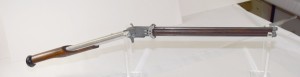
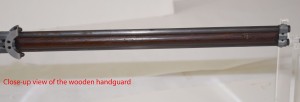
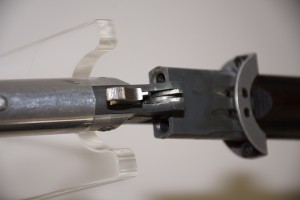
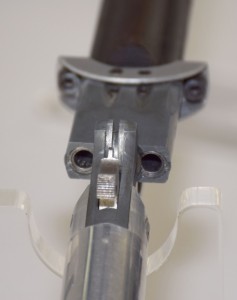
A while back I picked up an interesting single shot shotgun with a bronze receiver. A little research showed it as a ZULU shot gun.

The history of this weapon goes back to the end of the muzzle loading era. With the civil war  ushering in the era of the breech loading metallic cartridge firearm. With large stocks of muzzle loading weapons on hand countries needed a way to convert these weapons to a breech loading weapon. One of the first methods was the Snider or Tabatiere conversion.

By the late 1870’s large quantities of French converted rifle were on the surplus market with no buyers. A decision was made to convert them to a inexpensive shotgun. This was accomplished by reaming out the rifling in the barrels to make them smooth bore, scrubbing all the original marks off the rifles and then proof them with Belgium proof marks, cut down the stocks to a sporter configuration and removing the rifle sights and installing a front sight bead.

This example is a bronze receiver that was made during the Franco-Prussian war from French church bells that were donated because of the material shortage at the time.

Right side view

DSC_1636cssLeft side view

DSC_1641csClose up of the receiver area

DSC_1639s

DSC_1638cs

DSC_1642sBelgium proof marks on the breech block

DSC_1644s

DSC_1646sMarking on the inside of the breech block

DSC_1647s

DSC_1649sThe spring that acts as a breech locking device and firing pin retaining pin.

DSC_1650cs

DSC_1652s

DSC_1657s

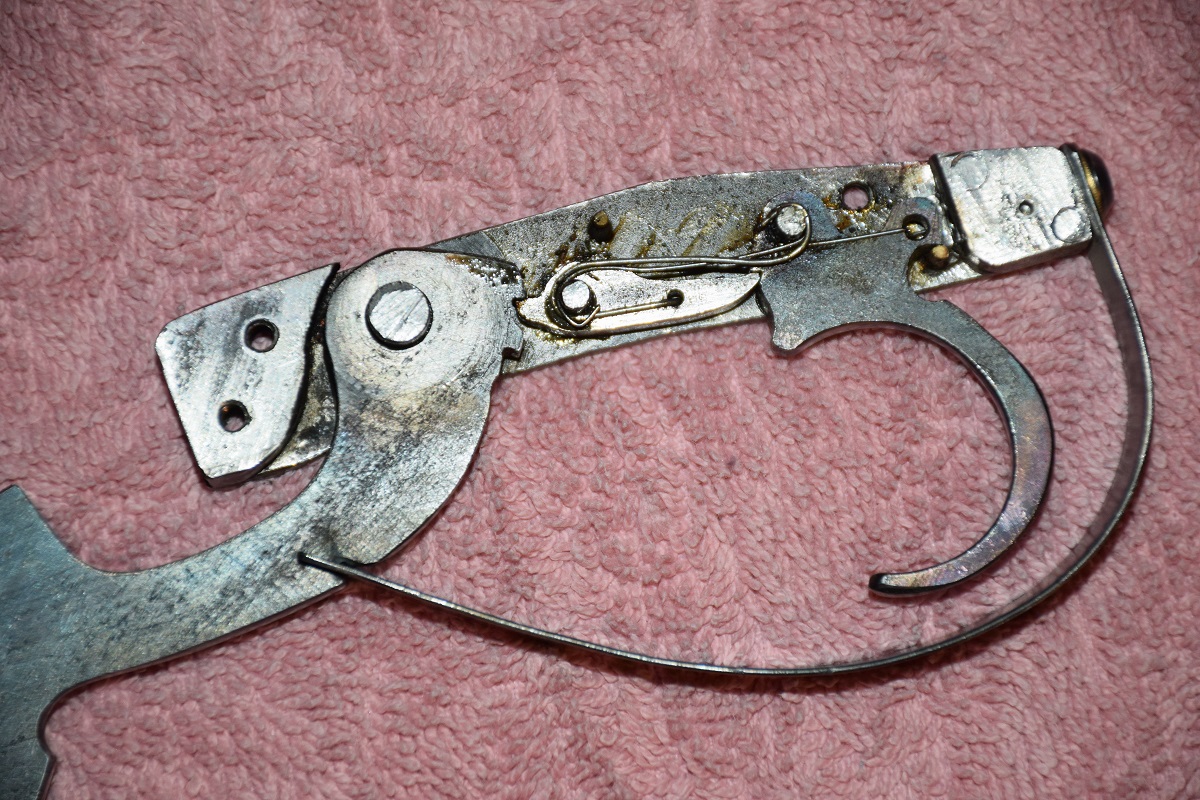
DSC_1654sThe angle of the hammer and the lack of a gripping surface make it very difficult to pull the hammer back and to drop the hammer by hand. The spring pressure on the hammer is quite high

DSC_1658sThe trigger guard is  from a M1857 rifle musket

DSC_1659sThe standard butt plate from a M1857 rifle musket

DSC_1653sThe front barrel band looks like a piece of copper pipe hammered to fit.

DSC_1643s


Lend lease pistols part 1

During World War II after the Dunkirk evacuation the British military was in dire straits for weapons that were lost.

There was a shortage of revolvers. Smith & Wesson was contracted to provide replacement handguns for England. Due to the urgent need there was no time for Smith & Wesson to design a new revolver so the M&P pistol was used. This weapon was designed to shoot the 38 special and with some minor modifications  implemented to convert this handgun to the British caliber .38/200.

The initial orders for this handgun were for South Africa but the British military staff in Washington DC diverted it to the United Kingdom.

Originally the Smith & Wesson M&P model came in four, five and 6 inch length barrels, with checkered would grips and commercial bluing. Due to the demands for faster and more economical production Smith & Wesson changed to a plane wood grip, 5 inch barrel and a phosphated finish.

The pistol were talking about today is one of the standard ones that were made.

There were 586,200 Smith & Wesson M&P  pistols produced. This is one of the of the 8000 pistols that Australia received.

DSC_1352cs

DSC_1350cs You could see that it’s marked United States property which is part of the lend lease package to the United Kingdom.

DSC_1356s

DSC_1355s

DSC_1357s

DSC_1354cs

DSC_1347cs

DSC_1348s Looking at this photograph you can seal the stampings that indicated it was used by Australia.

DSC_1344proof ws

DSC_1524s You can see the broad arrow stamp on the bottom of the frame.

DSC_1526s For more information on Smith & Wesson victory models please look at the following books:

https://images-na.ssl-images-amazon.com/images/I/51U2oVDIV4L._SX356_BO1,204,203,200_.jpg

https://www.amazon.com/U-S-Handguns-World-War-II/dp/0917218752/ref=sr_1_1?ie=UTF8&qid=1472402174&sr=8-1&keywords=U.S.+handguns+of+WW2

https://images-na.ssl-images-amazon.com/images/I/51I7Fru29yL._SX392_BO1,204,203,200_.jpg

https://www.amazon.com/Timothy-Mullin-K-Frame-Revolver-Phenomenon/dp/B00RWQZEZ6/ref=sr_1_2?s=books&ie=UTF8&qid=1472402271&sr=1-2&keywords=The+K+frame+revolver

Or go to the webpage.

http://forums.gunboards.com/

Webley Mark IV Singapore police pistol

This post deals with 2 Webley mark IV pistols. Both of them were issued to the Singapore police force. Both of these pistols are commercial versions and show no military markings.

The first is a standard mark IV webley.

DSC_1476cs

DSC_1473cs

DSC_1470s

DSC_1471s

DSC_1472c

DSC_1475cs

DSC_1498s

DSC_1478s

DSC_1500s

DSC_1469cs

DSC_1502s

The second version is the police model. This pistol incorporated a hammer safety. With this pistol the safety can only be engaged with the hammer down. The pistol can still be open to load or unload with the safety on. Production of the Police model ended in 1970.

DSC_1480cs

DSC_1509cs

DSC_1507sTop strap markings

DSC_1488csThe safety pushed to the safe position.

DSC_1489sClose up of the barrel proof marks

DSC_1487sTypical markings showing the model and proofing of the pistol

DSC_1486sYou can see the Singapore police markings and the red dot on the safety indicating the weapon is ready to rife.

DSC_1484cs

DSC_1482sRack markings painted on the butt of the grip

DSC_1496csA quick look at then side by side. showing the frame differences.

DSC_1492csNotice the hump design on the back of the frame and the difference in grip design.

DSC_1494cs


Pieper M-1893 Revolver

This pistol came about for usage by the Mexican military through a presidential decree in 1893 by president Porfirio Diaz.

The pistol was built in Liege, Belgium by the Pieper firm. It uses a gas seal design where the cylinder moves forward to seal it during firing. This is the same concept as the Nagant revolver. It is a seven shot double and single action revolver. The  total contract  was for 5000 pistols.


DSC_1411cs

DSC_1420cs

DSC_1421cs

DSC_1417sHard rubber plastic grips with H.Pieper Patent markings

DSC_1422cs

DSC_1423csThe rear of the cylinder showing the rebate area for the rims

DSC_1425csThe front of the cylinder for the gas seal

DSC_1429cs

DSC_1430csLanyard attached on the pistol grip

DSC_1433csCylinder latch. Looks like a Colt design. EJERCITO MEXICANO stamped on the side of the frame , top strap and cylinder.

DSC_1434cs

Markings on the cylinder

DSC_1435cs


Cut Away Model 38 Carcano carbine

This rifle was on the last Rock Island auction. Unfortunately I was not the winner of the bid. However, it is a beautiful example of an interesting piece.


145-1


145-2It would make a great addition to an Italian or cut away collection.

For more information on Carcano rifles check out these books.

https://images-na.ssl-images-amazon.com/images/I/41G41HGr2HL._AC_US240_QL65_.jpg

https://www.amazon.com/Model-1891-Carcano-Rifle-Developmental/dp/0764350811/ref=sr_1_1?ie=UTF8&qid=1471578138&sr=8-1&keywords=carcano

and

https://images-na.ssl-images-amazon.com/images/I/5165eoC4PtL._AC_US240_QL65_.jpg

https://www.amazon.com/Italian-Small-First-Second-World/dp/0764345834/ref=sr_1_1?ie=UTF8&qid=1471578324&sr=8-1&keywords=italian+small+arms

and

http://ironlegions.weebly.com/uploads/2/3/1/5/2315692/3788432.jpg?330

http://ironlegions.weebly.com/book-on-carcano-rifles-italys-battle-rifle.html

Nagant Target pistol

In the Gun Lab reference collect is a Nagant target revovler. This one is a Model 2 MTs-4. This pistol came about when shooters complained about the balance of the original MTs-4, first model.

In the ten years,1956 through 1966, that the various versions of the MTs-4 were produces approximately 8,200 were made. Making it a nice addition to any Nagant collection.

DSC_1359cs

DSC_1360sYou can see the movement of the cylinder when the hammer is cocked.

DSC_1410cs

DSC_1409cs


DSC_1364cs

DSC_1365sRight side for the pistol grip.

DSC_1363csThe front sight is adjustable for elevation.

DSC_1361cs

DSC_1373csThere is no ejector rod or carrier. The cartridges would have to be removed with an separate tool.

DSC_1377csThis photo shows the material removed from under the barrel to improve the balance of the pistol. It also allows for clearance for the shorter cylinder axle retaining pin.

DSC_1375csA couple of views of the rear sight. The framed was heavily modified to make the new sight.

DSC_1362csYou can see the clearance of the hammer spur in the grips.

DSC_1366sThe new rear sight that was built up on the pistol.

DSC_1407csA closer look at the rear sight. The rear sight was horizontally adjustable

DSC_1408csYou can find additional information on Russian weapons at:

http://www.russianrevolvers.com/

In addition there is a great series of posts at the gun boards forum.

http://forums.gunboards.com/showthread.php?196918-Russian-and-Soviet-Nagant-Target-Revolvers

Webley Mark IV Commercial pistol

While we are on the series of posts dealing with Webley revolvers, this is the next one to chat about. It is basically a standard Webley pistol with commercial proof marks, no acceptance marks and a standard finish.


DSC_0586s

DSC_0587s

DSC_1321sInteresting stamping marks on the barrel

DSC_1328s

DSC_1325sTop strap stamping

DSC_0592s

DSC_0591s

DSC_0589sA comparison between a war finish issued pistol and a commercial pistol

DSC_0595sClose up of the stamping on the left side of the frame between a issue pistol and a commercial pistol

DSC_0596s


RHKP Smith and Wesson revolver

This is just another interesting piece from the Gun Lab reference collection. This is just one of the weapons used by the Royal Hong Kong Police prior to being disbanded in 1997 when the British turn over Hong Kong to the Chinese. The pistol I am talking about is a Smith and Wesson model 10-7 revolver.
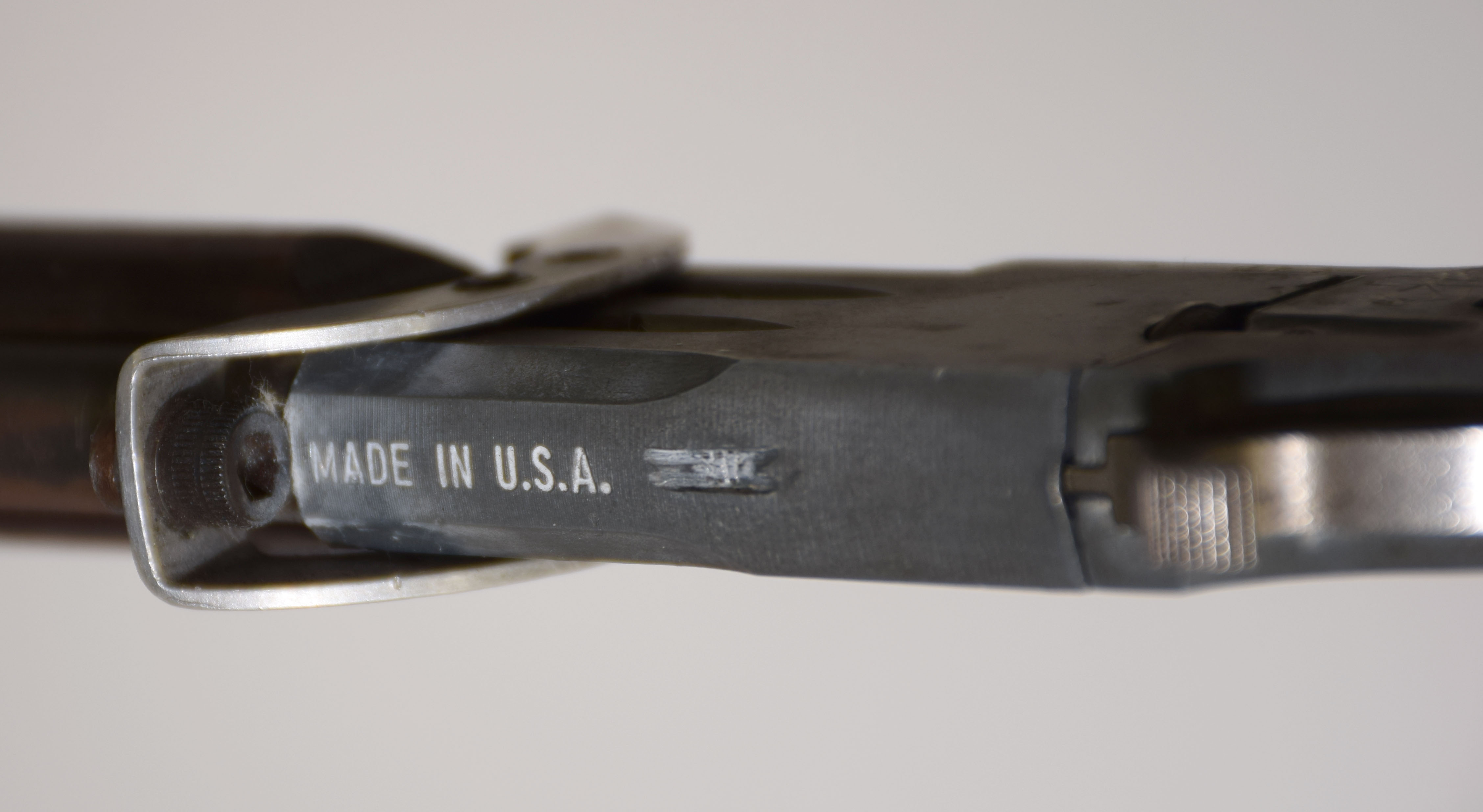
The pistol is a standard Smith and Wesson model 10-7 in 38 special.

DSC_1333sRight side view

DSC_1332sAn interesting mark, G20, on the yolk

DSC_1337csYou can see the model markings on the frame

DSC_1342csThe marking on the back strap showing the RHKP stamping and there number

DSC_1339sNothing super special about the pistol just an interesting foot note in history

VG1-5 barrel update

Work is progressing on the VG1-5. This post is about threading the barrel for the gas piston. In our last post about the barrel we had turn the out side dimensions and cut them for length. http://gunlab.net/vg1-5-update-barrels/

This post is the manual lathe work to do the threading.


Another step toward the final product being completed.

Webley Mk4 38/200

I have always enjoyed collecting and shooting the Webley 38 revolvers. Collecting them has been a challenge. Not because they are scarce but because information is actually hard to come by.

The Webley MkIV  38caliber pistol development started in 1921. This was due to the War Office wanting a smaller and lighter weapon but still have the same as the .455 pistols. It is based upon the MkIII pistol service revolver plus a number of other improvements reducing its weight to 22.25 ounces. After additional trials testing a few more alterations were made. One being changing the grip style to the MkVI type.

Over 100,000 Mark IV were made between 1939 and 1945.

This is a standard model pistol.

DSC_0762s

DSC_0764s

DSC_0768sYou can see that war finish is stamped on the frame. Also the flying bullet logo is stamped on the barrel.

DSC_0769s

DSC_0766s

DSC_0767sThe marking on the top strap.

DSC_0765s